
The 829-meter-high Burj Khalifa has been a flower in the desert in the UAE since 2010. This Adrian Smith project has 163 floors and ends with an observation deck with incredible city views. The publication in Property Investments Dubai found out when skyscraper construction in the UAE began and ended and what records the Burj Khalifa has hit until nowadays.
When was Burj Khalifa built
Who designed the Burj Khalifa? Adrian Smith was the chief architect of the project. His main goal was to erect a building taller than any other in the world and surpass his skyscraper height record. Smith’s most famous project before the creation of the Burj Khalifa was the Petronas Twin Towers in Kuala Lumpur.
Smith’s initial idea was a 518-meter-high tower in Dubai, but it was not tall enough for Sheikh Mohammed. He also rejected the following five versions of the project, but the option to build an 828-meter-high skyscraper seemed like a good idea.
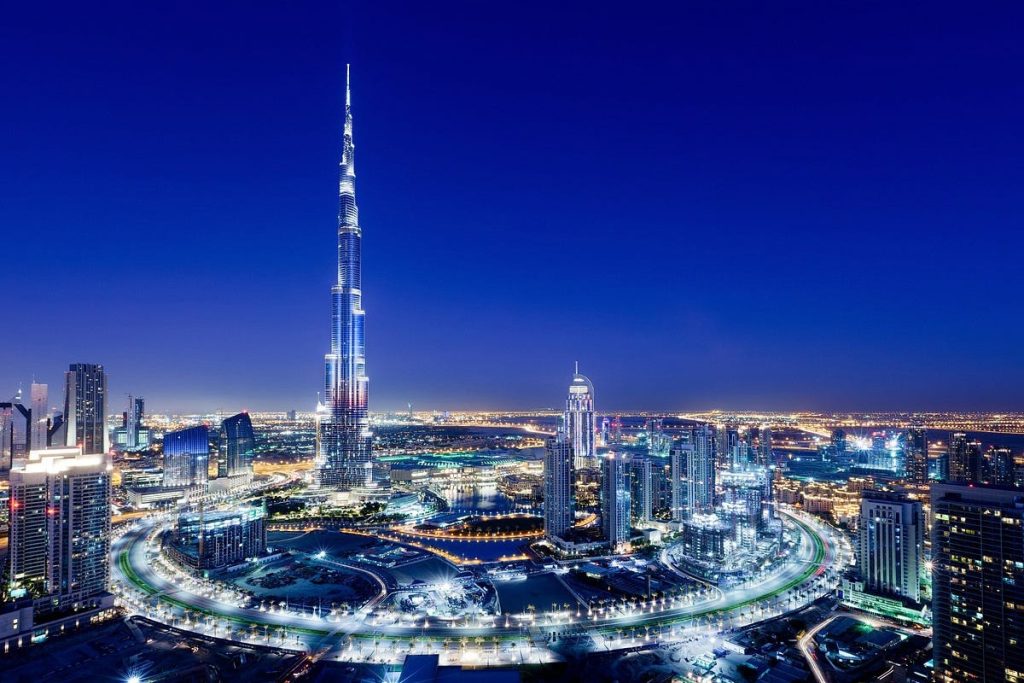
The main concept of the skyscraper project was to imitate the shape of the hemerocallis flower, also known as the spider lily. This unique plant, distinguished by its symmetrical and graceful structure, inspired the architects to create a design in which the three wings of the building diverge from the central core, resembling the flower’s petals.
Initially, the building was called the Burj Dubai. The Khalifa Tower, not the Khalifa, did not get its name because of a title or rank, as is often mistakenly believed. The popular version of the skyscraper’s name, which translates as “royal tower” or “king’s tower,” is invalid.
Initially, the skyscraper was called the Burj Dubai (the word “Burj” means “tower” in Arabic). However, at the last minute, it got a new name in honor of the President of the UAE. Thus, “Khalifa” is a leader’s name, not a title, emphasizing his role in supporting and financing the project.
How long did it take to build the Burj Khalifa? Construction started in 2004 and should finish in 2009. Funding constraints and climatic circumstances delayed construction by a year, and the official opening occurred on January 4, 2010.
The nuances of the building process
The Burj Khalifa has a firm foundation even though the tallest building in the world is in a desert area with loose rock. Engineers used hanging piles 45 meters long and 1.5 meters in diameter to support the building. There are 200 in total, and they can help the tower’s weight, which is about 0.5 million tons. The installation of the piles was complicated because the walls of the shafts collapsed after pulling out the drill. Because of this, engineers filled the shafts with a unique polymer resin, later replacing it with concrete.
Who made Burj Khalifa? Samsung’s builders worked at temperatures up to 41°C, greatly complicating the process. In the face of these problems, the authorities engaged 300 Chinese specialists who developed unique materials resistant to high temperatures, including concrete mixtures with the addition of ice. Thanks to a unique brand of concrete and a Y-shaped foundation, the skyscraper can withstand external temperatures of up to 50°C and an earthquake of up to 7 points.
Thanks to modern eco-technologies, the tower is self-sufficient in electricity. For this purpose, engineers built a 61-meter wind turbine and installed solar panels on the walls of the building, with a total area of about 15,000 square meters.
The building’s design provides exceptional protection against intense solar radiation. Light-reflecting glass panels and other energy-efficient solutions help reduce space heating, which is critical in Dubai’s climate, where temperatures can reach 50 C. They help to reduce air conditioning costs and ensure comfort inside the building.

How many floors are in Burj Khalifa
The 163-storey Burj Khalifa is 829.8 meters high. At its foot, an artificial Dubai musical fountain illuminated by 6,650 spotlights is 275 meters long. The jets reach 150 meters in height.
The owner of Burj Khalifa is Emaar Properties. This skyscraper has set several other world records. First, it is the tallest free-standing building. Secondly, it has:
- the highest open-air observation deck and service elevator;
- the fastest elevator for passengers rises to a height of 504 meters.
Is Burj Khalifa a hotel? No, but this building is the first in the world to combine different types of premises—from restaurants and boutiques to offices, gyms, and residential apartments. The latter are located on floors 19 to 108 of the Burj Khalifa. For those wishing to live in this world-famous skyscraper, there are options with one, two, three, or four bedrooms.
Each foreign buyer automatically gets a residency visa, the first step toward obtaining UAE citizenship. Currently, most of the luxury apartment buildings remain unoccupied. However, the developer plans for about 12,000 people to live and work in the tower.
What is inside Burj Khalifa
The Burj Khalifa has swimming pools, entertainment areas, and a park surrounding the skyscraper. In terms of comfort, the tower has a unique ventilation system that purifies, cools, and flavors the air, and the original floor grilles supply pleasant fresh air. Dubai has a hot climate, but unlike other skyscrapers worldwide, the Burj Khalifa does not have a rainwater collection system. Instead, the architect proposed a system for collecting condensate generated inside the building—this suggestion allows for collecting 40 million tons of moisture annually for the tower’s needs.

How to enter Burj Khalifa? The skyscraper has 57 elevators, which belong to the world’s fastest system—they move at 18 meters per second. The building has an autonomous power supply system, including a 60-meter wind turbine and large solar panels. People can see the tower from a distance of 90 kilometers. Thanks to the start of sales before the completion of construction, the developer managed to sell 90% of the available space.

In 2019, the Burj Khalifa was ranked seventh among the most visited attractions in the world. It surpassed such famous places as Buckingham Palace, Disneyland, and the Vatican in popularity. However, the skyscraper lost in competition to the Louvre, the Eiffel Tower, and several other landmarks. Despite this, the Burj Khalifa remains a symbol of modern architecture and engineering progress, attracting millions of tourists annually.