
The United Arab Emirates and the European Union have officially launched talks on a free trade agreement, a move that could redraw the economic map from the Gulf to Brussels amid global uncertainty heightened by the Trump administration’s tariff maneuvers. In a phone call, European Commission President Ursula von der Leyen and UAE President His Highness Sheikh Mohamed bin Zayed Al Nahyan agreed on the framework of the future pact, setting out their intention to translate political dialogue into concrete business preferences, Reuters has reported.
For Abu Dhabi, this is a strategic upgrade of its foreign trade strategy: the emirate has already concluded Comprehensive Economic Partnership Agreements (CEPA) with India, Indonesia and Turkey, and is now accessing the world’s largest single market with a GDP of over €16 trillion. The EU, in turn, gains direct access to the financial resources of the UAE’s sovereign wealth funds, as well as to the rapidly growing non-oil sector, which has shown double-digit growth rates over the past five years.
Focus on “green” hydrogen and AI-logistics
Brussels and Abu Dhabi have agreed that the negotiations will cover four key clusters: goods, services, investments and strategic cooperation. Particular emphasis is placed on renewables, green hydrogen and critical raw materials, where the UAE is already investing in production hubs from Spain to the Netherlands. Lowering tariffs and removing non-tariff barriers should open up new supply chains for European advanced manufacturing, healthcare and smart logistics, while Emirati companies will be able to scale their AI solutions in the field of port and aerospace infrastructure.
The EU is now the UAE’s second-largest trading partner, accounting for 8.3% of non-oil trade, and the emirate remains the largest buyer of European goods and the main recipient of investment in the MENA region. Analysts expect the FTA to increase bilateral trade by at least €50bn in the medium term, with some sectors – including medical technology and clean tech – set to double in the first three years of the deal.
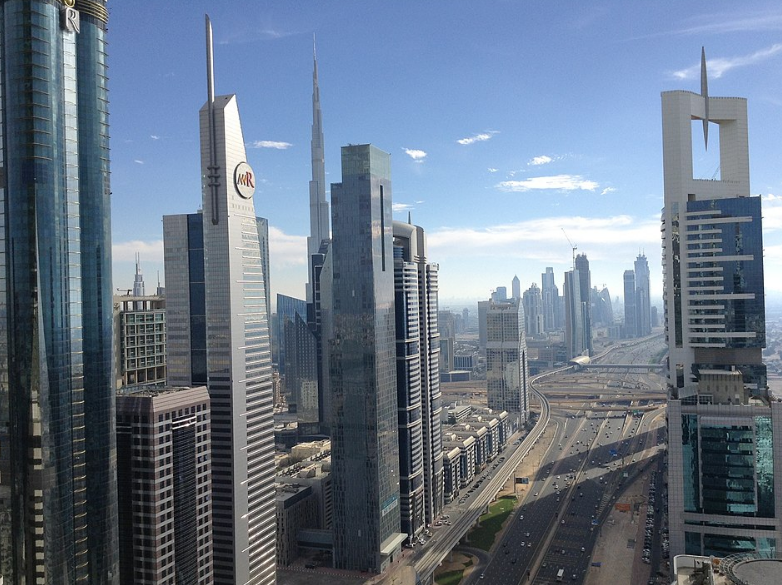
The UAE is a powerful Middle Eastern power
For the UAE, the Arab world’s second-largest economy and one of the world’s most capitalised investors, a direct path to Brussels is also a signal of differentiation from the GCC. As Reuters reported, Abu Dhabi has long been lobbying for a separate negotiating track, believing that a single framework with Saudi Arabia and other members of the Cooperation Council does not reflect its pace of diversification and investment ambitions.
Sovereign wealth funds ADIA, Mubadala and ADQ are already actively investing in European green-tech and semiconductor assets, and the FTA will provide them with tax and regulatory benefits. In a global context, the agreement strengthens the UAE’s role as a bridge between East and West, able to balance between Asian CEPAs and transatlantic alliances. If negotiations proceed on an accelerated schedule, the emirate could become the first Gulf country with a full-fledged free trade area with the EU, setting a new standard for economic integration.