
The first quarter saw the Abu Dhabi Securities Exchange (ADX) experience its biggest jump in foreign capital in four years, with net foreign investment soaring 151% to AED8.54bn, and total trading by foreign participants reaching almost AED70bn ($19bn). The share of non-resident traders rose to 42% of all trades for the first time, a figure that underscores the emirate’s appeal amid global volatility, Bloomberg has reported.
Group CEO Abdulla Salem Al-Nuaimi attributes the momentum to the exchange’s massive transformation, from launching a holding structure to rolling out a new trading engine and expanding its product line. “We are in sync with the UAE government’s goals of attracting FDI, diversifying the economy and strengthening the financial sector,” the top manager emphasizes, adding that ADX is actively promoting dual listings and connecting to international platforms to maintain the momentum of capital inflows.
Abu Dhabi’s $800 billion market
Earlier this year, the $800 billion market reorganized its post-trade into two “daughters” — clearing and depository, and the main matching engine received latency, enabling high-frequency and algo-trading. Al-Nuaimi claims: “the updated system increases operational efficiency by 400%” and will become the basis for new investment products in 2025. Despite the weaker start of the benchmark index, liquidity increased: transaction volumes +41%, the number of shares in trades +39% y/y.
The turbulence caused by President Trump’s trade policy has only increased the challenges for emerging exchanges, but ADX is betting on tech investments and product diversification to maintain the interest of portfolio managers looking for a “safe haven” in the GCC region. In parallel, the exchange is developing the Growth Market, a segment for new-generation companies (sport-tech, health-care, digital services). Without an IPO, 14 issuers are already listed here, and the sector’s capitalization grew by 34% in the quarter.
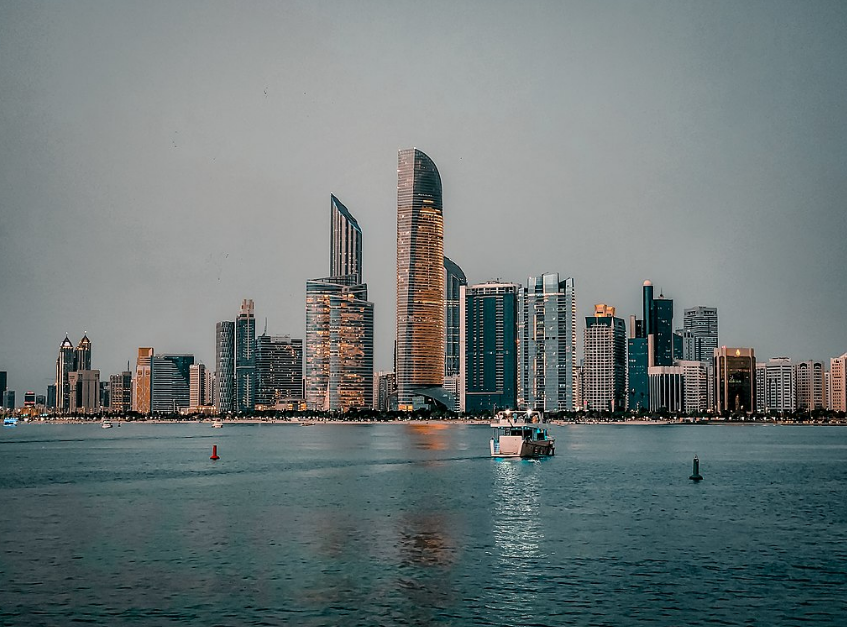
ADX holds the bar of a regional hub
The April global sell-off tested asset managers’ assumptions that the GCC will be able to insulate itself from US tariff risks. ADX also experienced outflows, but quickly compensated for losses by expanding its line of exchange-traded funds. The market capitalization of ETFs on the platform jumped by 109% to 784 million AED: 16 funds are currently traded, covering 10 developed & emerging markets, as well as UAE bonds and global sukuk.
The exchange is also simplifying the rulebook for private companies seeking to list without the classic road show. “We have opened a fast channel of access to capital, increasing visibility and expanding the investor base, thereby supporting the economic diversification of Abu Dhabi,” Al-Nuaimi summarizes. Taken together, these steps strengthen ADX’s position as a regulatory mature and technologically advanced financial hub, ready to compete for global capital flows in the post-oil era.