
United Arab Emirates President, His Highness Sheikh Mohamed bin Zayed Al Nahyan, has sent his congratulations to Syrian President Ahmad Al-Shar on the formation of the country’s new government, The National has reported. Similar messages of support also came from Sheikh Mohammed bin Rashid, Vice President, Prime Minister and Ruler of Dubai, and Sheikh Mansour bin Zayed, Vice President, Deputy Prime Minister and Chairman of the Presidential Court.
The new cabinet, formed in Damascus on Saturday night, is tasked with guiding the country through a difficult five-year transition period. One of the government’s key tasks will be to rebuild infrastructure destroyed by years of civil war, amid ongoing Israeli attacks, deep internal instability and limited access to resources. The new administration is also expected to focus on restoring international trust and domestic legitimacy.
Supporters of the previous regime
Amid the political reset, remnants of Bashar al-Assad’s regime have stepped up their military operations, particularly on the country’s coast, culminating in the largest attack since his fall from power in December. Multi-pronged attacks on key security facilities by Assad’s supporters have forced the new government to urgently send reinforcements and declare a general mobilization to stabilize the situation.
In the chaos that ensued, armed groups newly integrated into the Ministry of Defense, as well as individual militants, have taken advantage of the situation to settle scores with members of the Alawite community, a religious minority to which Assad himself belonged. Although the previous regime relied on the loyalty of the Alawites, it was their regions that remained economically marginalized, and many members of this group were themselves victims of repression. Since Assad’s overthrow, a significant portion of the Alawite population has expressed fears of being punished for the dictator’s actions simply because of their sectarian affiliation.
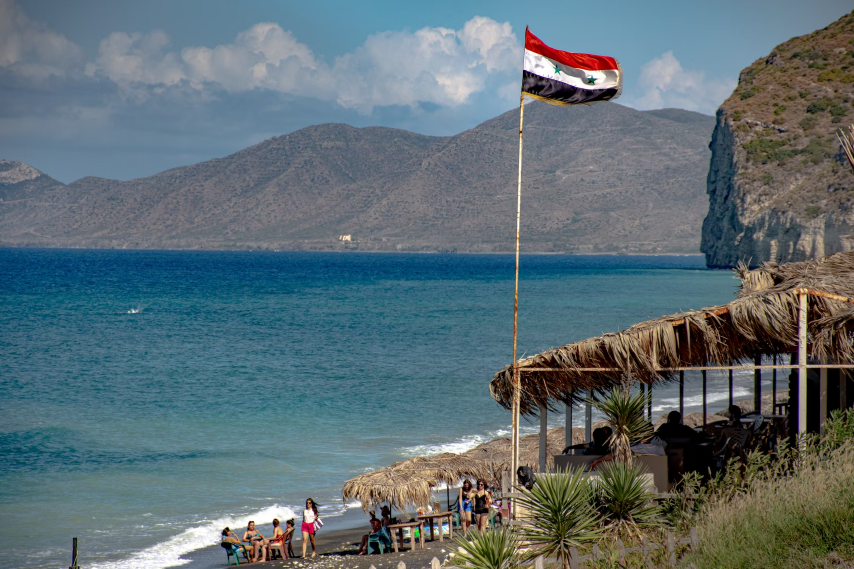
The new government craves stability
According to the Syrian Network for Human Rights (SNHR), at least 1,084 people have been killed since the start of the new wave of violence. Of these, 639 were killed by government forces and allied groups, and another 445 were killed by the remnants of pro-Assad militants, including 213 soldiers and 231 civilians. These figures indicate a deeply fragmented security landscape and serious challenges for the new government.
One of the new government’s key promises — protecting minority rights and preserving pluralism — has become a necessary condition for the gradual lifting of international sanctions. However, despite the announced agreement with all armed groups to disband in December, the process of integrating former militants into a single armed structure has proven extremely difficult. To achieve stability, the new government will have to not only resolve inter-ethnic tensions, but also convince the international community that the new Syria is capable of ensuring security, institutional stability, and respect for human rights.