
The UAE National Institute for Human Rights is set to launch a major public campaign aimed at raising awareness of its work and providing greater protection to the public. Maqsood Cruz, head of the Abu Dhabi-based organization, said a number of projects to be launched this year will support the nation’s efforts to uphold human rights to the highest standards, reported by The Natonal
They include the launch of a complaints service that will allow people to report human rights issues and seek help, as well as the introduction of site visits to enhance engagement with communities. People will be able to file complaints on the institute’s website, which will then be investigated. The national campaign, called “Know Your Rights,” aims to inform the public about the legal support available to them and what measures are being taken to protect them from ill-treatment.
Advocating for Human Rights
NHRI plans to launch its own podcast series and a dedicated YouTube channel to promote the importance of human rights in society. The NHRI was launched by the late President Sheikh Khalifa, who issued a federal law in 2021 to establish the independent body. The institution is tasked with providing information to authorities on whether national legislation is in line with international human rights treaties and conventions to which the UAE is a signatory. It also monitors human rights abuses and reports them to the relevant authorities.
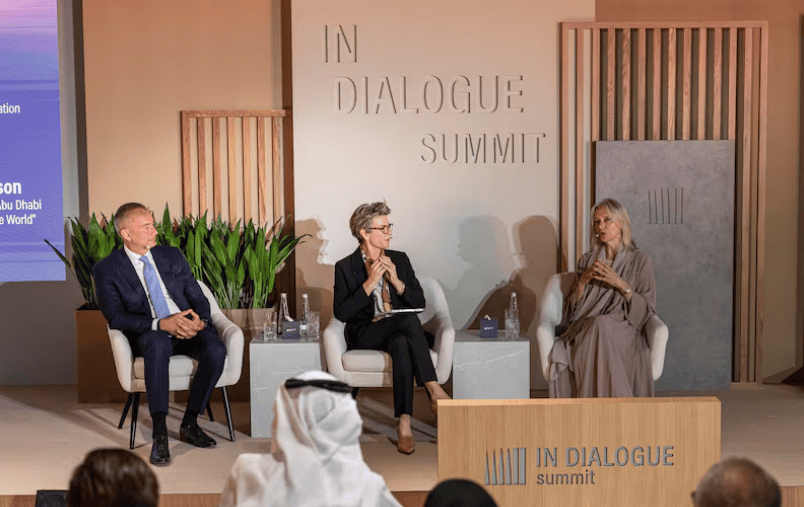
The Abu Dhabi summit brought together keynote speakers from the UAE and abroad to highlight the critical need to promote harmony and coexistence among all faiths and cultures at a time when division is widespread around the world. Mr Kruse has previously spoken about human rights and equality as the cornerstones of building a better and more just society, causes close to his heart, partly because he was raised by a German father and an Emirati mother.
Countering extremism
Mr Kruse, who was previously the executive director of Hedayah, the International Centre of Excellence for Countering Violent Extremism, spoke about the important role that dialogue plays in preventing radicalisation. “All forms of extremism start with an idea,” he said. “That idea triggers an emotional response, which can then lead to behaviour that can escalate into violence. The key is to intervene early, before tensions get out of hand. Dialogue allows for that intervention.”
He stressed the importance of proactive and preventative conversations, noting that many of those drawn to extremist ideologies are disillusioned and harbor resentment. “The challenge is to address these issues as they arise, not after they have already escalated,” he said. Dialogue, he said, is a continuous effort that takes place at every level, within people, between communities, at the national level and in global diplomacy. He added: “It will never be perfect, but it should never stop.”