
The UAE is strengthening its position as a global leader in artificial intelligence (AI) by implementing comprehensive strategies that foster innovation, investment and enabling legislation, report by PwC. With a developed infrastructure, an adaptive regulatory framework and policies that promote technological progress, the country continues to attract the best talent in the field of artificial intelligence and new startups. While the UAE’s vision for AI goes beyond economic benefits, the technology is expected to have a significant impact on the economy. The country is projected to rank third in the world after China and the US in terms of AI’s contribution to the economy.
According to the PwC report, the contribution of AI to the UAE’s GDP will be approximately 13.6% by 2030, which will amount to about $100 billion. In addition, the contribution of AI to the region’s economy is expected to grow by 20-34%, with the UAE leading the way with its strong commitment to the development and implementation of AI. According to KPMG International Limited, the UAE’s regulatory framework is paving the way for innovation in financial technology and digital payments. Cybersecurity has become a key driver of digital transformation, as the UAE has implemented numerous data privacy laws to protect personal and organizational information.
Abu Dhabi aims to become the first AI-powered government
At the government level, Abu Dhabi aims to become the first AI-powered government. Its recently launched strategy focuses on creating a robust digital infrastructure, implementing 100% sovereign cloud computing, and fully automating and digitizing government operations. Nick Redshaw, Oracle’s Senior Vice President of Cloud Technologies for the Middle East and the UAE Country Leader, praised the UAE leadership for its inspiring vision for the AI era. Ahmed Gamal, Business Development Manager, Nvidia AI Solutions at Advanced Integration, a strategic partner of NVIDIA, highlighted the UAE’s transformational progress in AI and technology, positioning it as a model for regional and international markets.
He noted that the UAE was one of the first countries to launch a national AI strategy in 2017 (UAE AI Strategy), which aims to become a global AI hub by 2031. The strategy focuses on key sectors such as education, healthcare, transportation and energy. The UAE has become a top destination for investment in cutting-edge technologies, attracting talent and AI startups. With government support and strategic partnerships with major global corporations such as NVIDIA and Google, the country has secured a prominent place among the world’s leading countries in AI.
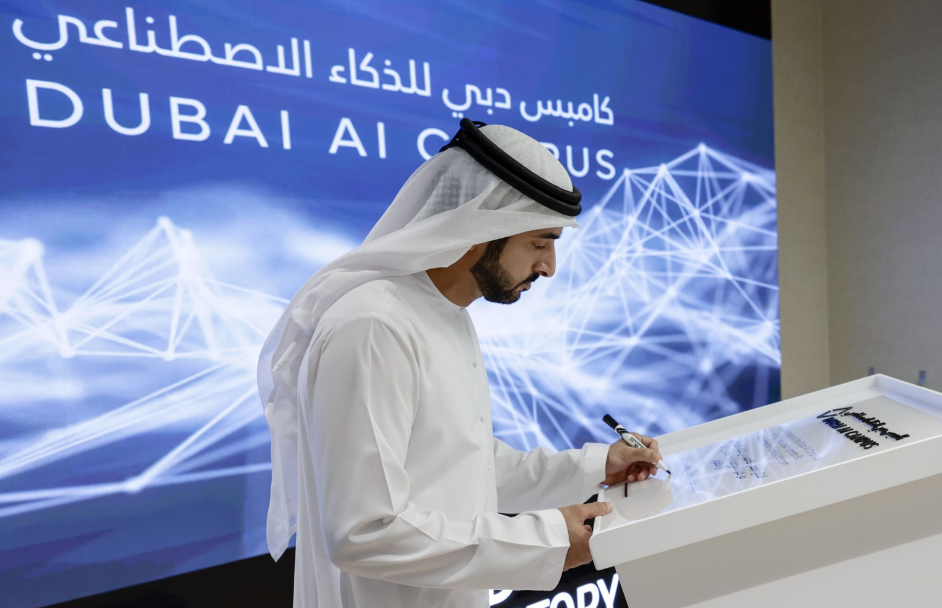
Global AI Projects
In addition, Gamal said that the UAE is home to many global AI projects, and its investments in AI are expected to generate significant economic benefits in the coming years. Samer Al Jayusi, Regional Head of AI and GenAI for Central and Eastern Europe, Central Europe, Turkey and Africa, highlighted the UAE’s strategic approach, which combines flexible regulation with ambitious investments in cutting-edge technologies.
He noted that the UAE was one of the first countries in the world to introduce policies regulating the use of AI, while fostering an environment for innovation. Dr. Akram Awad, Managing Director and Partner at Boston Consulting Group, highlighted the UAE’s competitiveness in the field of AI, attributing its success to a well-developed digital infrastructure and a supportive regulatory and investment ecosystem. He also highlighted that the number of AI professionals has increased by 40% since 2022, solidifying its position as a leading hub of AI talent and expertise.