
A team of scientists in Abu Dhabi have developed artificial lunar dust derived from the UAE’s natural resources to help lay the groundwork for the nation’s ambition to land Emirati astronauts on the moon’s surface, reported by Dr Dimitra Atri, an astrophysicist at NYUAD. Researchers at the New York University Abu Dhabi (NYUAD) Space Exploration Laboratory said the substance, called Emirates Lunar Simulant, will allow scientists to test space instruments and equipment to ensure they are ready for the country’s future lunar missions.
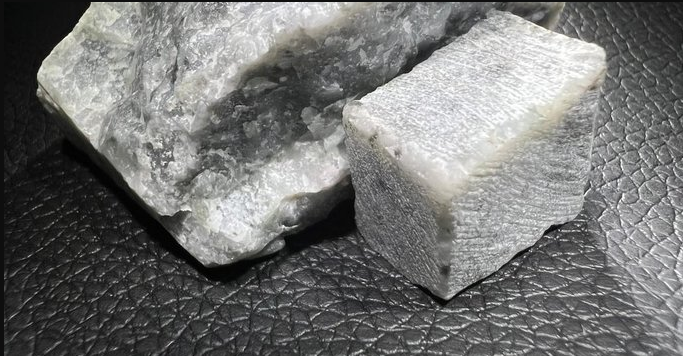
The researchers, led by Dr Dimitra Atri, created a soil simulant from anorthosite-rich rocks found in the UAE. These rocks closely resemble the mineral and chemical composition of lunar samples, making them ideal for testing. The work will fuel the UAE’s growing ambitions for space exploration. Last month, Salem Al Marri, Director General of the Mohammed bin Rashid Space Centre, announced the UAE’s goal of sending an Emirati astronaut to the Moon within 10 years.
Emirates Lunar Simulant
“By leveraging local geological resources to advance planetary science, this project enhances the UAE’s role in space exploration and contributes to global efforts to prepare for future lunar missions,” said Dr. Atri, Principal Investigator at the Space Exploration Laboratory. He is part of the scientific team behind several UAE-led missions, including the Hope probe orbiting Mars, the lunar exploration programme and a spaceflight to the asteroid belt between Mars and Jupiter. “The Emirates Lunar Simulant will help test the performance of Mars rovers, train astronauts and validate lunar equipment, helping to optimise missions and reduce risk to future lunar exploration.”
Because transporting large quantities of lunar soil to Earth is impractical, such soil simulators are essential in preparing for lunar exploration. The Abu Dhabi team, which includes researcher Vigneshwaran Krishnamurthy and students from NYUAD, is using the simulator to evaluate tools for key mission operations, including landing, surface exploration, construction and resource extraction. The anorthosite-rich rocks were sourced from the Semail ophiolite complex, an ancient geological formation in the UAE that contains a well-preserved portion of Earth’s lithosphere, or outer crust.
UAE Space Sector
Researchers have also been exploring the substance’s potential for use in lunar agriculture and growing food on the Moon to support long-term efforts to establish a human presence in space. Bright minds at NYUAD are playing a leading role in the UAE’s burgeoning space sector. Scientists in the Emirates are conducting space exploration, allowing them to recreate extreme planetary environments. Researchers will be able to recreate the surface conditions of the Moon, Mars, asteroids and the Martian atmosphere by adjusting the gas composition, pressure and temperature inside a controlled chamber.
The chamber also has an optical system capable of reproducing solar conditions in different regions of the solar system. Researchers will be able to expose samples to intense ultraviolet radiation, simulating the effects of prolonged space travel. The Emirates have made significant strides in the global space race in recent years. Hazza Al Mansouri made history in September 2019 as the first Emirati to travel to space, and in March 2023, Sultan Al Neyadi was selected as the first Arab astronaut to undertake a long-term space journey. The UAE has signed a contract with NASA to provide a key component of the US-led Gateway, an orbital station on the moon, in exchange for sending an Emirati to the station.